 Cost-Effective Company Cars For 2011
by Tim Barnes-Clay, the man behind the wheel.
Date: 01 December 2010
A few years ago if you had asked a director to give up their large company car and accept a smaller, more fuel-efficient alternative, you may have been looking for a new job soon afterwards. Now things are different - greener cars are now a perfectly acceptable executive option. Business Link looks at a few new models which might just measure up to the mark:
Peugeot 508
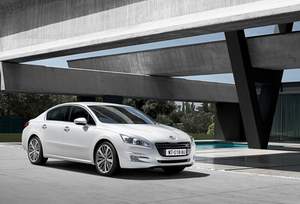
Due for UK launch in March next year, the new Peugeot 508 will be available in two complementary body styles: a saloon and a sports wagon estate.
The fresh model ushers in the era of e-HDi technology for the brand, with a new-generation Stop/Start system.
Rapid, efficient and silent, e-HDi combines reduced fuel consumption and CO2 emissions (up to -15% in town) with maximum drivability.
Initially the 1.6 litre powered car will have a combined fuel economy of 53.4 mpg and emissions of only 114 g/km. Later on in 2011, the green car’s CO2 output will fall even lower to 109 g/km with fuel economy of 56.0 mpg, due to the introduction of electronically-controlled air intakes.
A new 2.2 litre HDi 204bhp engine also tops the 508 range in a ‘GT’ version, and features a special suspension set-up. The power train promises to deliver a level of performance superior to the former 2.7 litre HDi V6 of the 407, with improved responsiveness, enhanced fuel economy and lower CO2 emissions: - down 33% to 150g/km, compared to 223g/km. That’s a reduction of 73g/km!
Prices are yet to be announced for the 508 range but Peugeot claims the cost will be around the £18,000-20,000 bracket.
Volkswagen Passat
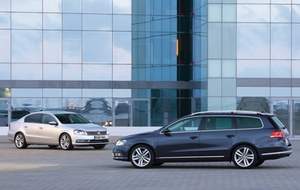
Following its debut at the Paris Motor Show, the seventh generation Volkswagen Passat is ready to order, costing from £18,470 for the saloon and £19,745 for the Estate.
The ever-popular German car takes on not only a refreshing appearance both inside and out with every panel apart from the roof being new, but also adopts the latest technologies and efficiency measures to make it among the most advanced and economical cars in its class.
Every diesel engine is now badged as a BlueMotion Technology product and is equipped with battery regeneration and Stop/Start systems as standard. The result is that the entry-level 1.6-litre TDI 105 PS model, due to go on sale early next year, will return 68.8 mpg and emit 109 g/km of CO2. Three trim levels will be available: S, SE and Sport.
Range Rover Evoque
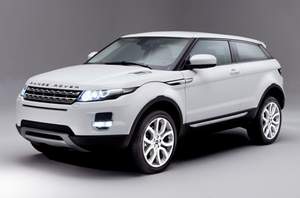
In keeping with the ethos of Range Rover the all-new Evoque delivers premium levels of craftsmanship, economy, luxury, performance and renowned Land Rover all-terrain capability into a shrink-wrapped more compact package.
Offering CO2 emissions sub 130g/km and fuel economy of 58mpg combined, the Evoque is the lightest, most fuel-efficient Range Rover ever and, some might say, a strong demonstration of the marque’s commitment to environmental sustainability. Lightweight construction techniques and the addition of a front-wheel drive variant ensure optimum efficiency is achieved. The new state-of-the-art petrol and diesel engines come with direct injection and Stop/Start. The Range Rover Evoque also adopts low CO2 systems such as electric power-assisted steering and is built to maximise end of life recyclability.
Looks-wise the Evoque marks a bold evolution of Range Rover design. With its dramatic rising beltline, a muscular shoulder running the length of the car, and a distinctive taper to the floating roofline, the car adopts a very dynamic profile with a powerful and athletic stance. Inside, the cabin is lavishly appointed with premium quality materials and an elegance befitting of a Range Rover interior.
The Range Rover Evoque will be manufactured at Land Rover’s Halewood plant in Merseyside and is due to go on sale in the UK from summer 2011. Prices are expected to start from £30,000.
Toyota Verso-S
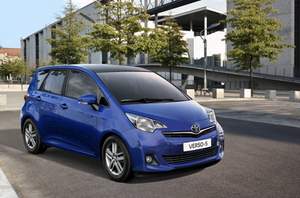
Toyota will return to the mini-MPV market next year with the new Verso-S - its first contender in a segment it created itself over a decade ago with the launch of Yaris Verso.
Compact, yet spacious and smart, the Toyota Verso-S showcases efficient space management.
Although it measures less than four metres long, clever packaging delivers remarkable room for both those on board and their luggage.
The Japanese car is available with the Toyota Optimal Drive 1.33-litre Dual VVT-i petrol engine. Matched to a six-speed manual transmission, it returns a class-leading combined cycle fuel economy of 51.4mpg, with 127g/km CO2 emissions.
The Verso-S is also available with Multidrive S, Toyota’s continuously variable transmission. It features a manual override seven-speed sequential mode which the driver can operate using paddle shifts mounted on the steering wheel, or the gear lever. In models equipped with this system the Toyota can achieve 54.3mpg and 120g/km CO2 emissions.
Prices are yet to be announced, but UK and European sales are scheduled to begin in February 2011.

